Zepbound quickly became one of the most talked-about weight loss medications in recent years. For many patients, it delivered something they had been searching for—real, visible progress driven by biology instead of willpower alone. But inside clinics, a different conversation is already starting to take shape. Patients are not just asking how to start. They are asking what happens next, and whether something more advanced is already on the horizon. California Trim Clinic says that question is pointing directly toward Retatrutide, an investigational therapy gaining attention for how it approaches weight loss differently—and why some patients are paying attention earlier than expected.
(PRUnderground) April 28th, 2026
What Is Retatrutide?
Retatrutide, often referred to as “reta,” is a peptide currently being studied in clinical trials for weight loss and metabolic health. Despite not being approved for use anywhere in the world yet, it is making its way through online markets. The peptide is currently in clinical trials.
Peptides are short chains of amino acids that act as signaling molecules in the body, influencing processes such as metabolism, inflammation, and cellular repair. Retatrutide is being evaluated specifically for how it interacts with metabolic pathways related to weight regulation.
How Does Retatrutide Support Weight Loss?
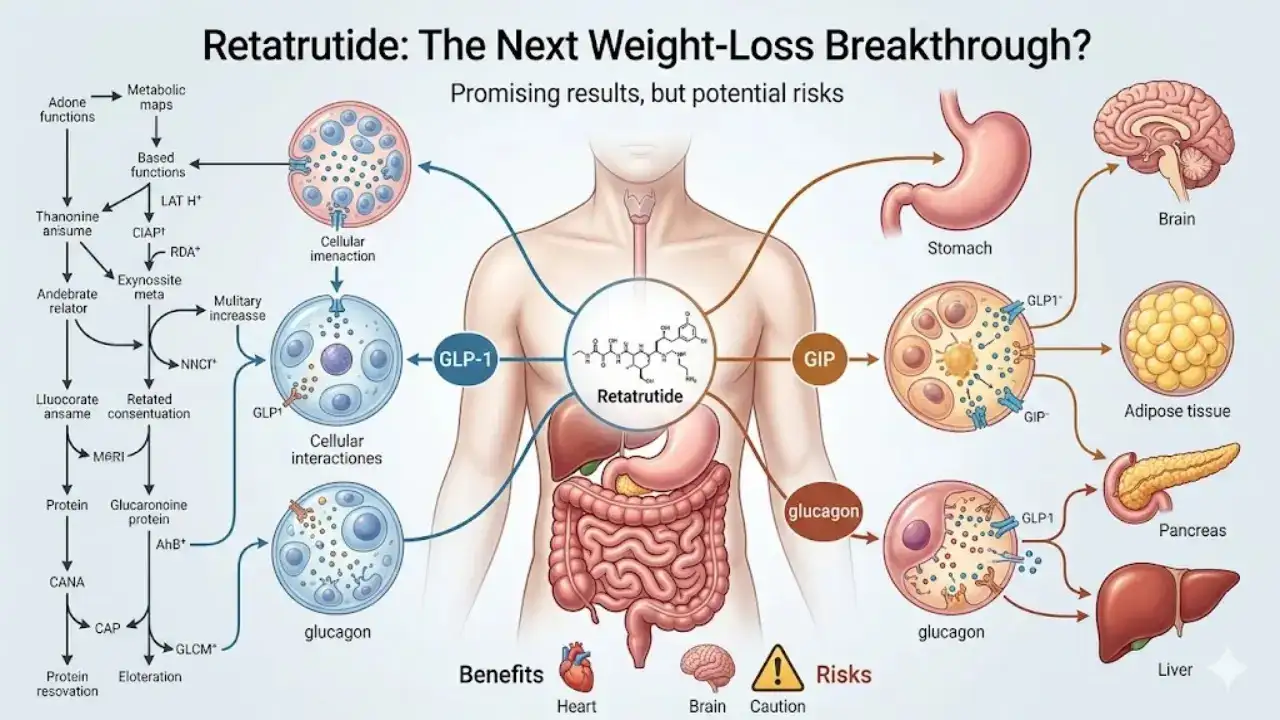
Retatrutide works by targeting three key hormone pathways that influence metabolism, appetite, and blood sugar regulation.
The first is GLP-1, which helps reduce appetite and slows gastric emptying, making people feel full longer. The second is GIP, which plays a role in fat storage and insulin response. The third is glucagon, which is associated with energy expenditure and how the body uses stored fat.
By activating all three pathways, retatrutide not only reduces how much a person eats but may also influence how efficiently the body burns fat. This multi-pathway approach is what differentiates it from medications like Zepbound, which primarily focus on fewer metabolic signals.
What Do Early Results Show?
Early clinical trials have shown significant weight loss outcomes under controlled, physician-supervised conditions. In some studies, higher-dose groups experienced reductions exceeding 20 percent of body weight over time.
These results are not being positioned as guarantees, but they are enough to generate serious interest. Patients are paying attention because the magnitude of change suggests something different may be happening metabolically.
California Trim Clinic notes that this is exactly how new phases of treatment gain traction—not through hype, but through patterns patients and clinicians begin to recognize early.
Why the Conversation Is Already Moving Beyond Zepbound
Zepbound represents a major shift in how weight loss is approached, but it is still part of an evolving landscape. Patients who have seen results are becoming more aware that metabolic therapy is not static.
That awareness is changing behavior. Instead of waiting for results to slow down or plateau, some patients are beginning to ask what the next phase of treatment could look like before they reach that point.
California Trim Clinic describes this as a shift from reactive thinking to proactive strategy. Patients are no longer just starting treatment—they are thinking ahead.
The Effect of Retatrutide on Gym-Goers
A weekly dose of retatrutide may suppress appetite and accelerate weight loss, which can lead to a leaner appearance in a relatively short period of time. However, rapid weight loss does not always mean fat loss alone.
Without proper nutrition and resistance training, some of that weight reduction may come from muscle mass. This is especially relevant for individuals focused on body composition rather than just scale weight.
There is also a psychological component. Appetite suppression can make dietary adherence easier, but it may also reduce the enjoyment of food. Some early observations suggest changes in motivation, mood, and overall relationship with eating, though the exact mechanisms are still being studied.
What Are the Side Effects of Retatrutide?
Current research indicates that the most commonly reported side effects are gastrointestinal. These include nausea, diarrhea, vomiting, and constipation. For some individuals, symptoms may be mild and temporary, while others may experience more intense reactions.
There have also been reports of more serious adverse events under investigation, including severe gastrointestinal complications. As with any investigational therapy, long-term safety data is still limited, and outcomes may vary depending on dosage, patient profile, and supervision.
How Might Retatrutide Affect Mental Health?
Emerging discussions suggest that retatrutide may influence more than appetite and metabolism. Because it interacts with pathways in the brain related to reward and motivation, it may also affect how individuals experience food, cravings, and even alcohol consumption.
Some reports indicate possible changes in mood, libido, or emotional responsiveness. Individuals have described feeling less driven by food-related impulses, but in some cases also more detached overall.
Researchers are still working to understand these effects. As with many metabolic therapies, the relationship between physical and psychological changes remains complex and not fully defined.
Why Patients Are Looking Into Retatrutide Before It’s Even Approved
This is where the urgency comes in. Patients are no longer waiting for widespread adoption before learning about new therapies. They are researching earlier, asking better questions, and trying to understand where the field is going.
That behavior is being driven by experience. Patients who have already gone through one phase of treatment are more aware of how quickly the landscape can change.
Many start exploring next-step strategies through educational resources or structured evaluations like a $99 Discovery Call, where emerging options are discussed within a clinical context.
Why This Moment Feels Different
What makes this moment unique is not just the emergence of a new therapy, but the way patients are responding to it. They are not waiting to be told what is next—they are actively trying to understand it.
This creates a different kind of momentum. Information spreads faster, expectations shift earlier, and patients become more engaged in their own treatment strategy.
California Trim Clinic sees this as a turning point where awareness is starting to move ahead of availability.
How California Trim Clinic Approaches Emerging Therapies
California Trim Clinic approaches new therapies with a focus on structure, evaluation, and patient-specific context. Not every patient needs the same strategy, and not every therapy fits every situation.
That is why decisions are made through physician-guided review rather than assumptions or trends. Each patient’s history, goals, and metabolic response are taken into account.
Patients can learn how these decisions are structured through the clinic’s treatment process, which outlines how care is personalized from the start.
What Should Patients Do Right Now?
If you are currently seeing results, this is not about changing course immediately. It is about understanding where your current path leads and what options may exist beyond it.
Patients who educate themselves earlier are often the ones who navigate transitions more effectively. Waiting until progress slows can limit flexibility.
To better understand your current stage and potential next steps, explore insights on the California Trim Clinic Blog or schedule a $99 Discovery Call to review your options with a clinical team.
The Bottom Line
Zepbound changed expectations around weight loss, but it did not mark the end of the conversation. For many patients, it is only the beginning of understanding how metabolic therapy evolves over time.
Retatrutide is not widely available yet, but the attention it is receiving signals where the field may be heading. Patients who recognize that shift early are often the first to adapt.
California Trim Clinic is already seeing that awareness take hold. The question is no longer just how to start—but how to stay ahead.
About California Trim Clinic
California Trim Clinic is a telemedicine provider serving patients nationwide. The clinic focuses on prescription-based medical weight loss and compounded peptide therapy. Medical weight loss options include Retatrutide, Tirzepatide, and Semaglutide, while compounded peptide therapies include NAD+, Tesamorelin, and Sermorelin. Care is designed to be safe, effective, and results-driven.
The post Meet Retatrutide: The Unapproved Cousin Of Zepbound That Supports Weight Loss Differently – California Trim Clinic Reveals Why Retatrutide Is Gaining Serious Attention Before Approval first appeared on
Original Press Release.

